game review · Scythe
Scythe
2025-12-01 · 3 min read
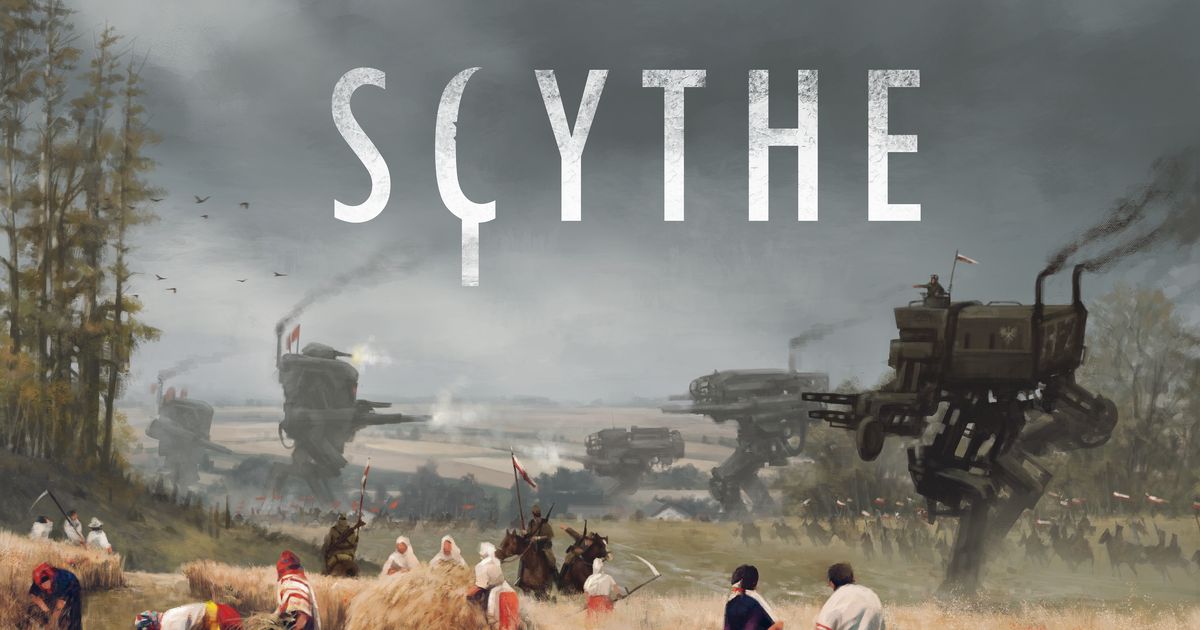
The first thing anyone shows you about Scythe is the art, and fair enough, it’s genuinely gorgeous, diesel-punk mechs looming over wheat fields, a painterly Eastern European alt-history that doesn’t look like anything else on the shelf next to it. But the actual crown piece of this design, the part that does the heavy lifting once you’re past the first look, is the player board layout. Every faction’s mat lays out its unique starting positions and action costs right there in front of you, and the whole game is a puzzle of sequencing those actions efficiently, which two do I pair this turn, what am I setting up two turns from now. It’s dense at a glance and genuinely elegant once it clicks.
It gets called a war game constantly and that’s a little bit of a mismatch. Combat happens, and when it does the stakes are real since winning costs you popularity that matters at final scoring, but this is an engine builder wearing a war game’s coat. Most of a session is resource conversion and expansion timing, not clashing mechs, and I think the people who go in expecting Kemet-style aggression are the ones who come away disappointed. Go in expecting a euro with teeth and you’ll have a much better time.
Where I’ll push back on the hype a little is replayability at the highest level of scrutiny. The random faction and player mat assignment does a lot to vary each game, but after a couple dozen plays I’ve started to notice certain faction-and-mat pairings edging toward a dominant line more often than the box’s promise of endless asymmetry suggests. That’s a long-term nitpick, not a session-to-session problem, most groups won’t hit it before they’ve gotten their money’s worth many times over.
At two it’s tight and fast. Push it up toward five and the between-turn downtime starts to bite, since your neighbor’s optimal double-action isn’t always obvious to read from across the table, and the whole thing can drift into everyone quietly running their own machine. Still, for the production value alone, real metal coins, a genuinely epic-feeling board, this earns its reputation. Just go in knowing you’re getting a resource-management puzzle in a war game’s clothing, not the other way around.