book review · Cloud Atlas
Cloud Atlas
2026-03-14 · 3 min read
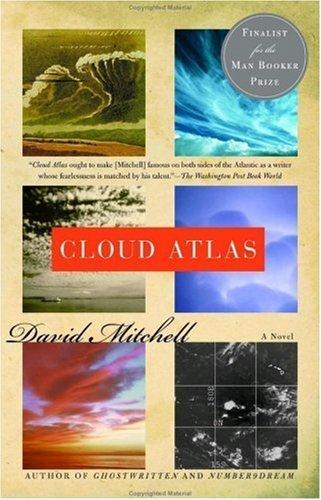
The structure is the whole trick and I mean that as high praise, not a knock on the actual writing underneath it. Mitchell nests six stories inside each other, a Pacific-crossing journal in the 1850s, a bisexual composer’s letters from between the wars, a pulpy nuclear-conspiracy thriller in the 1970s, a modern-day publishing farce, a genetically engineered clone’s interrogation in a dystopian Korea, and a post-apocalyptic oral history on the far side of civilization’s collapse, and cuts each one off mid-scene before diving into the next, building up like a pyramid to the sixth story sitting whole at the center, then walking back down through the other five in reverse to their actual endings.
It sounds like a gimmick and for the first thirty or forty pages I worried it was one. I started this book more than once before it actually took, the opening journal section is deliberately archaic and takes real patience before its own momentum kicks in. But once the structure’s rhythm becomes clear, once you realize each interrupted story is going to actually pay off its cliffhanger a few hundred pages later, the whole thing becomes genuinely hard to put down, and Mitchell’s prize trick, writing in six wildly different voices and genres convincingly, from pulp thriller to bureaucratic dystopian testimony to a barely-literate post-collapse dialect, holds up across every single one.
The connective tissue, the idea that some thread of a single soul or a single act of predation and resistance echoes forward through every era, is stated plainly enough that it never feels like you’re supposed to dig for it, and I actually appreciated that Mitchell doesn’t hide the ball. The Sonmi-451 section and Robert Frobisher’s letters were the two I didn’t want to end, and I found myself rereading pages just to stay in them a little longer.
Not every story lands with equal force, the Cavendish farce is the weakest link for me, comic relief that occasionally undercuts the momentum around it. But as a piece of structural ambition that actually earns its ambition instead of just showing it off, this is one of the best-built novels I’ve read in years.