book review · The Glass Bead Game
The Glass Bead Game
2026-01-31 · 3 min read
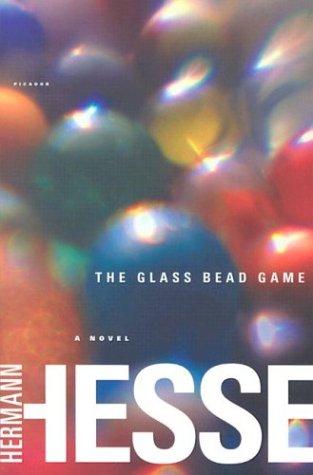
Hesse never actually tells you the rules. The glass bead game itself, the thing this entire novel is named for and organized around, a synthesis discipline where mathematics, music, philosophy, and art get combined into something like a formal language, stays deliberately abstract for all four hundred-plus pages. That’s either the whole point or the book’s biggest cop-out, and I’ve gone back and forth on which more than once since finishing it.
What you actually get instead is a biography, Joseph Knecht’s rise through Castalia, the isolated academic province where scholars devote themselves entirely to contemplation and the Game and, by design, contribute nothing directly back to the world outside their walls. That tension, between a life of pure intellectual cultivation and a life that actually engages with human suffering, is the real engine of the book, and it’s most alive in the handful of Knecht’s confrontations with people who’ve chosen the other path, a Catholic monk skeptical of Castalia’s detachment, an old friend who left for the world Knecht never did.
The prose is dense in a way that rewards slow reading over fast reading, I found myself putting this down every few pages just to actually sit with an idea before moving on, which felt right rather than like a chore. The three short “Lives” appended at the end, imagined past incarnations Knecht writes as a student exercise, ended up being my favorite part of the whole book, more alive and specific than a lot of the main narrative’s more abstract stretches.
I won’t pretend the ending doesn’t divide people, it’s abrupt and ambiguous in a way that reads as either perfectly earned or a genuine letdown depending on what you needed from four hundred pages of buildup. I landed somewhere in between. This is Hesse at his most philosophically ambitious, occasionally at the cost of being a fully satisfying novel, but the ideas about art, isolation, and what a life spent purely on cultivation costs a person are worth the density it takes to get there.