game review · Too Many Bones
Too Many Bones
2026-05-13 · 3 min read
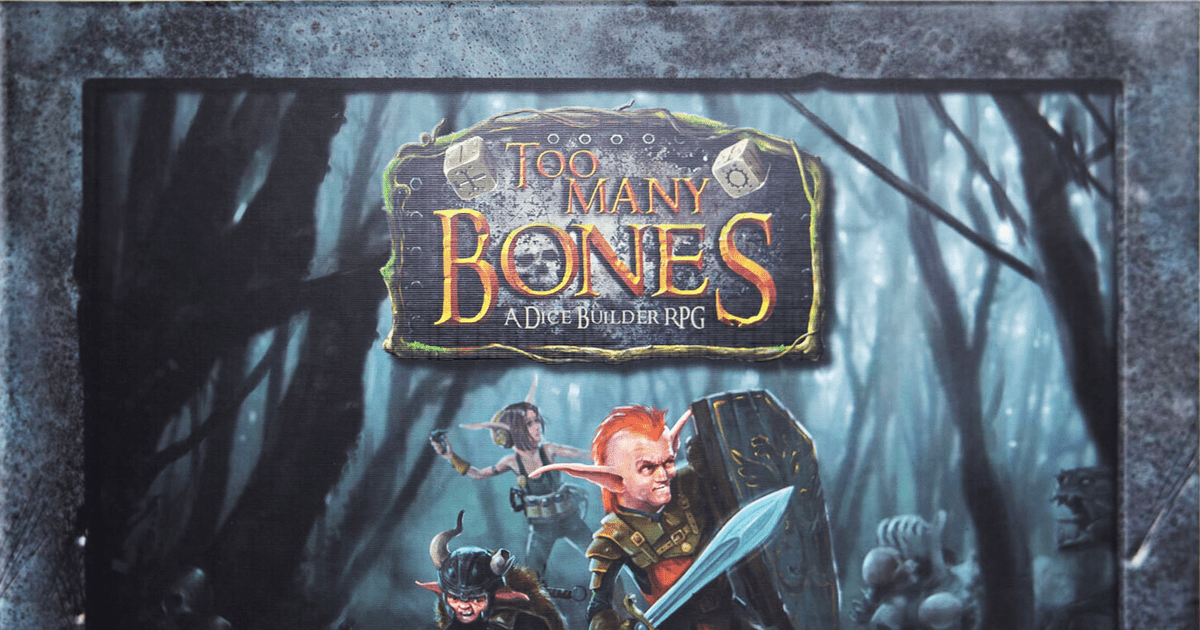
The core trick of Too Many Bones is right there in how you build your dice pool over the course of a session. Every character starts with a small handful of dice, and as you level up mid-fight you unlock new, unique-shaped dice with their own faces and their own abilities, but you only ever roll up to your dexterity stat’s worth on a given turn. So the pool grows, your options grow, and you’re constantly deciding which subset of your own toolbox to actually bring into a fight. It’s a character sheet you assemble one die at a time, and it’s genuinely one of the smarter combat engines I’ve played.
I want to be honest about the onboarding, because it’s real. The rulebook makes you work for it early on, and every gearloc plays different enough that “learn the game” and “learn your specific character” are basically two separate tasks stacked on top of each other. This isn’t a game you hand to someone who wants to be doing something meaningful by turn two without a rules explainer in the room. But once a character clicks, and for me that took most of one full session, the depth stops feeling like homework and starts feeling like the actual reward.
What sold me for the long haul is how much control the box hands you over your own night. You pick your gearloc, you build an encounter deck to whatever length and difficulty suits the table, and the whole thing is genuinely built as a one-sitting “single-serving RPG” rather than a campaign commitment, which matters a lot for a group that doesn’t have a standing weekly slot. It plays great solo too, which is rarer than it should be for something this crunchy, and the tactical grid combat stays sharp without turning into a spreadsheet.
Component quality is the kind built to survive actual use, not built for the landfill, and the price tag mostly earns itself back in how much game is actually in the box. It’s a lot to absorb up front and I wouldn’t put it in front of a casual table looking for a light night. But for a group willing to climb the first-session hill, this is as good as dice-based co-op combat gets.